3 to 6 Months, (Size Medium), V neck vest with front tie knot and cute print for boys
Zero Full Sleeves Cotton Vest - Beige & White - Rs 72.45
This full sleeves vest for kids with cute teddy bear print on solid colour makes it look attractive. The vest features V neck and will keep the baby super snug. Front tie knot ensures all day comfort.
6 to 12 Months, (Size Large), soft and comfortable round neck pullover style vests for boys
This adorable set of 3 sleeveless vests with trendy print on solid color base makes it look attractive. Easy
pullover style of these vests helps in fuss free dressing. Kids will be
comfortable all day long in the soft fabric of these vests.
1 to 3 Months, (Size Small), V neck vest with front tie knot and cute print for kids
Zero Full Sleeves Vest Multi Print - Orange White - Rs 105.00
This full sleeves vest for kids with ute print on solid colour makes it look attractive. The vest features V neck and will keep your baby super snug. Front tie knot ensures easy dressing & all day comfort.
1 to 3 Months, (Size Small), V neck with front buttons
Zero Full Sleeves Front Open Vest Rock Festival Print - Red - Rs 92.14
This soft and comfortable full sleeves vest for your little one with cute print on solid color base makes it look stylish. V neck and front button fastening ensure fuss free dressing. The soft fabric of the vest will keep your child comfortable all day long.
3 to 6 Months, (Size Medium), round neck tee with lounge pant for boys
Zero Full Sleeves Tee With Lounge Pant Bear Print - Green - Rs 150.15
This tee and lounge pant set for your little one with the cute printed tee features round neckline and print to the front. The lounge pant with soft elastic waist ensures comfort. Carefully tailored with an impeccable finish, this set will keep your little one at ease all day long.
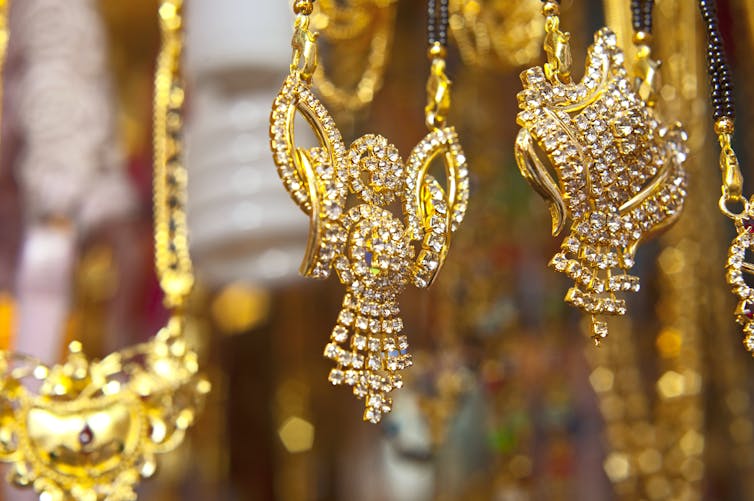
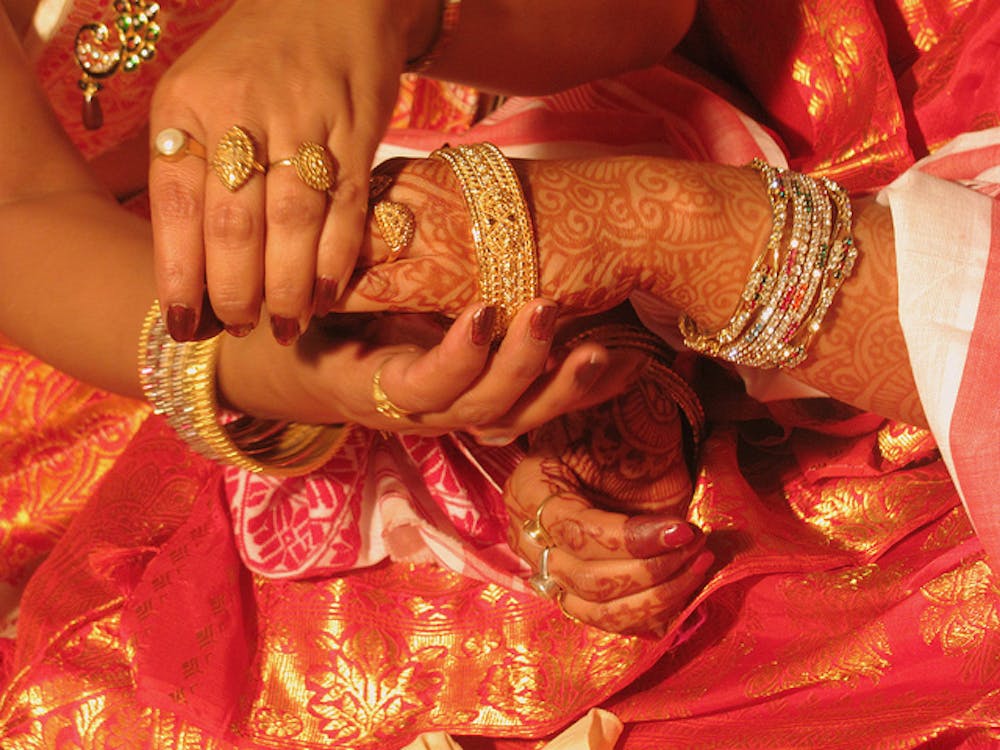
Shift to silver or lower carat gold jewelry is important for India
Alexandra Lande/ShutterstockFergal O'Connor, University of York The Indian government has been trying to reduce its citizen’s demand for imported gold through a number of means over the last few years. This is part of a wider crack down on currency used in the black market, that included the withdrawal and replacement of its two largest denomination bank notes in early November. The strategy will likely have some unintended consequences if we take our cues from the events of 1910. Indians’ famous love for gold has created serious and ongoing economic issues for the nation. In 2011, Australian investment bank Macquarie estimated that 78% of India’s household savings were held in gold. In effect, this means that India has a dual currency system where people choose to save mostly in gold rather than rrupees. This is unlike any other major economy and begs the question: how do you wean a population off a precious metal?
Building up savings in gold rather than deposits in a bank creates a permanent drag on India’s growth. This happens because the savings do not increase the available funds for lending within the banking system. One reason it is so difficult to put this gold to work as investment capital is that 79% of it is bought as jewellery, rather than bars or coins. India is the world’s largest consumer of gold jewellery at nearly 700 tonnes in 2015 according to GFMS Gold Survey 2016. However, it mines less than two tonnes of gold a year. This means India must import gold worth US$25 billion each year, pushing up their current account deficit and pulling down the value of the rupee. In 2015, Prime Minister Narendra Modi’s government introduced a Sovereign Gold Bond scheme which allowed gold holders to swap their gold for an interest bearing bond. At the end of the bond’s life investors would effectively be returned the same amount of gold. This move reduced the minimum amount of gold necessary to participate in such a scheme to two grammes. As of November 2016, 14 tonnes of gold had been subscribed to the two gold bond issues, with another five tonnes collected through the older gold monetisation scheme (which has a larger minimum deposit of 30 grams).
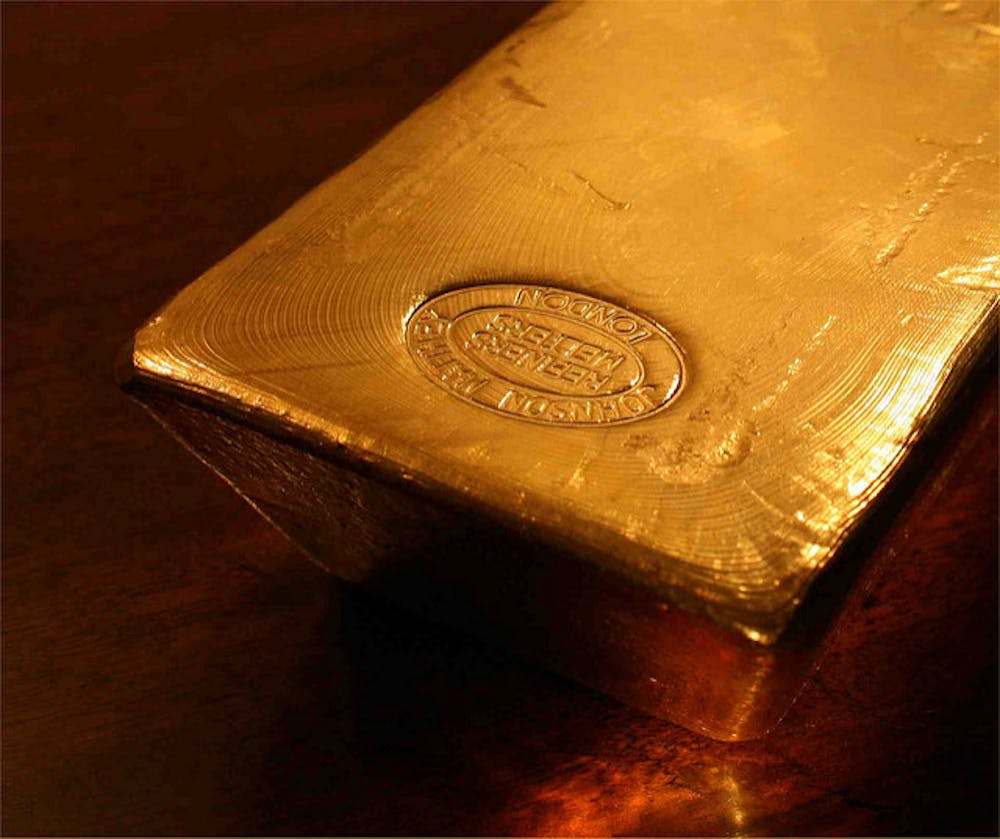
Bullion for you.Bullion Vault/Flickr, CC BY-NC-ND However, relative to India’s estimated privately held gold stock of 20,000 tonnes these deposits represent tiny amounts and it still doesn’t seem like a solution.
Unintended consequences
An alternative would be to permanently reduce gold imports. To that end, in 2013, the government started to increase import taxes on gold imports to 6%; this now stands at 10%. However, falling gold prices during that period meant that there was still a 12% increase in gold imports in 2015 as consumers snapped up what they saw as bargain prices. And here is where we go back more than 100 years to see how this all worked out last time. You see, India has battled precious metals imports for quite some time. In 1910 the government of India increased the import tariffs on silver from 5% to 11%. A market report in 1912, by Pixley & Abell, a gold wholesaler, pointed to a 28% fall in silver demand in the Indian Bazaars in the three years following the increase. They attributed this to not just a fall in demand for silver due to tax increases, but also a substitution of gold for silver in people’s savings as gold became more attractive on a relative basis. Between 1910 and 1930 net imports of silver in India fell from 98m ounces to 31m, according to British Geological Survey Reports. After this time India gradually became the world’s largest gold consumer, a position it finally lost to China in 2015. And it seems a return to silver as a major investment for consumers in India may be on the cards. Following the recent import tax hikes for gold, 2015 saw Indian silver imports grow to almost 8,000 tonnes, 14% up on the previous 2014 record. At the same time, demand for gold jewellery, which accounts for 75% of all Indian gold demand, is down 30% for the 12 months to the end of september 2016, according to the World Gold Council. This points to a possible shift back to silver as a more prominent investment in India. Gold makes up the vast majority of Indian jewellery sales. But the graph below shows the rapid growth in silver jewellery demand in India, which is up over 600% in ten years, relative to marginal growth of only 25% in gold jewellery demand.
Growth in Indian Gold and Silver Jewellery Demand.Thomson Reuters GFMS Gold 2016 and Silver Survey 2016, Author provided Of course silver is not the only precious metal investment option available. If investors want a more compact form of wealth, then platinum, worth 56 times more per ounce, might suit. But a swap to silver in India, as was the norm pre-World War I, seems more likely and could have a major effect on prices. For a sense of scale, the Indian gold Jewellery market in 2015 was worth US$25 billion, while the total world silver jewellery market was worth only US$3.5 billion. Even a small substitution from gold to silver would result in a massive increase in the price of silver. A 10% reallocation from gold jewellery investment to silver in India would nearly double world silver jewellery demand. Mines and other sources would not be able to fill the gap immediately; prices would rise, further fuelling demand and creating a new, shiny headache for those trying to marshal India’s unusual economy. Fergal O'Connor, Senior Lecturer in Finance, University of York This article is republished from The Conversation under a Creative Commons license. Read the original article.
Microplastics are getting into mosquitoes and contaminating new food chains
khlungcenter/ShutterstockAmanda Callaghan, University of Reading and Rana Al-jaibachi, University of Reading
There is no doubt that plastic pollution in oceans is a growing worldwide problem. The internet is full of images of seabirds and other marine animals entangled in plastic waste, and animals starve because their guts are blocked with plastic bags.
But the problem goes much deeper than this. Much plastic pollution is in the form of microplastics, tiny fragments less than five micrometres in size and invisible to the naked eye. Our new research shows that these microplastics are even getting into tiny flying insects such as mosquitoes. And this means the plastic can eventually contaminate animals in a more unlikely environment: the air.
Microplastics can come from larger plastic items as they break down, but are also released directly into waste water in their millions in the form of tiny beads found in many cosmetic products including face wash and toothpaste (though these are now banned in many countries). Many tiny animals can’t tell the difference between their food and microplastics so end up eating them. Once inside an animal, the plastic can transfer via the food chain into fish and other creatures and eventually become a potential health problem for humans.
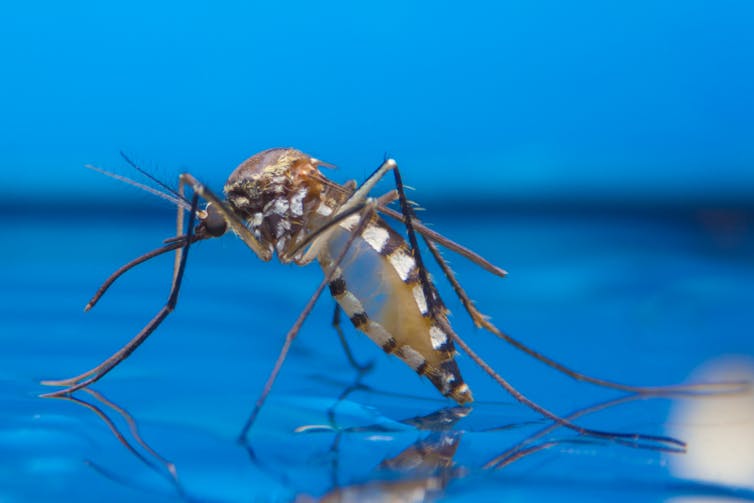
Mosquitoes leave the water and take microplastics with them.Shaun Wilkinson/Shutterstock
By studying mosquitoes, we have found a previously unknown way for plastic to pollute the environment and contaminate the food chain. Our new paper, published in Biology Letters, shows for the first time that microplastics can be kept inside a water-dwelling animal as they grow from one life stage to another.
Although most microplastic research has focused on the sea, plastic pollution is also a serious problem in freshwater, including rivers and lakes. Much of the freshwater research has concentrated on animals that live in the water throughout their life. But freshwater insects such as mosquitoes start their lives (as eggs) in water and, after several stages, eventually fly away when they grow up.
Testing the mosquitoes
It occurred to us that aquatic insects might carry plastics out of the water if they were able to keep the plastics in their body through their development. We tested this possibility by feeding microplastics to mosquito larvae in a laboratory setting. We fed the aquatic young in their third larvae stage food with or without microplastic beads.
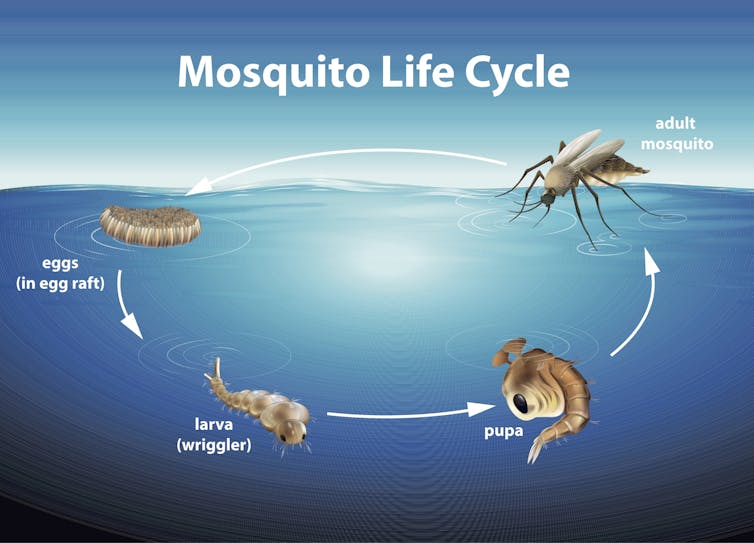
We then took samples of the animals when the larvae shed their skin to become larger fourth-stage larvae, when they transformed into a non-feeding stage called a pupa, and when they emerged from the water as a flying adult. We found the beads in all the life stages, although the numbers went down as the animals developed.
Plastics were retained as the mosquitoes went through different life stages.Blue Ring Media/Shutterstock
We were able to locate and count the microplastic beads because they were fluorescent. We found beads in the gut and in the mosquito version of the kidney, an organ that we know survives the development process intact. This shows that not only do aquatic insects such as mosquitoes eat both sizes of microplastics, they can keep them in their gut and kidney as they develop from a feeding juvenile larva up to a flying adult.
In this way, any flying insect that spends part of its life in water can become a carrier of plastic pollution. And flying insects are eaten in their thousands by predatory insects in the air such as dragonflies as well as by birds and bats.
Our results have important implications since any aquatic insect that can eat microplastics in the water could potentially carry them in their body to their flying stage where they can move the plastics into new food chains. As a result, freshwater plastic pollution is a problem that has implications far beyond those of water quality and eventual marine pollution.
Clearly these results raise a number of questions, including what effect microplastics have on the survival and development of mosquitoes through their life stages. And we still need to examine the effect of different types and sizes of plastics on more species to see how widespread an issue this could become. Amanda Callaghan, Associate Professor of Zoology, University of Reading and Rana Al-jaibachi, PhD researcher, University of Reading
This article is republished from The Conversation under a Creative Commons license. Read the original article.
India has a sexual assault problem that only women can fix
Nisha Bellinger, Boise State University
India is the most dangerous country for sexual violence against women, according to the Thomson Reuters Foundation 2018 survey.
The survey, which measures sexual and non-sexual violence, discrimination, cultural traditions, health care and human trafficking, has been criticized for reflecting more perception than data.
But India barely fares better in other studies that rank its treatment of women. It placed 131st of 152 countries in the Georgetown Institute’s global ranking of women’s inclusion and well-being.
India’s National Crime Records Bureau reported 338,954 crimes against women – including 38,947 rapes – in 2016, the most recent government data available. That’s up from 309,546 reported incidents of violence against women in 2013.
High-profile attacks on Indian women have shocked this nation of 1.3 billion in recent years. The 2012 gang rape of a 23-year-old student in Delhi who died from her injuries caused public outrage. The incident helped spur an amendment to India’s criminal law, which broadened the definition of sexual crimes against women to include stalking, acid attacks and voyeurism.
This year, Prime Minister Narendra Modi issued an executive order allowing the death penalty as a punishment for people convicted of sexually assaulting a child under 12.
But stricter laws apparently did little to prevent 34 girls from being tortured and raped at government-funded shelters in India’s Bihar state earlier this year.
Women’s representation in India
My research on diversity in government suggests that one of the reasons India has not been able to effectively address crimes against women is the lack of women in national political office.
That’s because, research shows, having women in government can lead to more and better laws that safeguard women’s well-being.
India’s population is 48 percent female. But women hold just under 12 percent of seats in the national legislature.
That falls well below the 30 percent “critical mass” that the United Nations Equal Opportunity Commission believes is necessary for women lawmakers to be influential in policymaking.
Local governments in India actually have a quota system that ensures women hold one-third of seats in rural and city councils. But female representation in India’s far more powerful national government remains comparable to countries like the Republic of Congo and Mauritius, where women hold about 11 percent of legislative seats.
Rwanda, where 61 percent of legislators are female, has the most women in government of any nation in the world, followed by Cuba, with 53 percent.
These are not necessarily the safest places in the world for women. According to the Georgetown Institute’s ranking of women’s well-being, Iceland, Norway, Switzerland, Slovenia and Spain are some of the safest – all countries where women hold over 30 percent of legislative seats.
Political representation does not translate precisely, directly or immediately into physical security for a given population. But it’s a start.
Read more: child-abuse-begins-with-touch
Women help women
Research demonstrates that governments that include representatives from across society – that is, of different political parties, races, classes, genders, geographies and religions – produce better quality of life for citizens than less inclusive governments.
My latest book shows that countries with a vibrant political party system enable diverse groups to influence decision-making. Because they are a product of deliberation and cooperation between politicians with divergent ideologies, policies formulated in such societies are more likely to reflect the needs of diverse groups. Scholarship likewise indicates that women in office may prioritize different kinds of policies than men – including those that address the needs of women and children.
In New Zealand, where women hold 38 percent of parliamentary seats and the prime minister is a woman, lawmakers recently guaranteed paid leave for victims of domestic violence. That gives victims time to relocate, protecting themselves and their children from their abusers.
Women in the United States Congress have also proactively addressed sexual harassment inside government.
In March, female senators from both parties – who make up 22 percent of the U.S. Senate – pushed Senate leadership to call a vote on legislation that would give legal representation to women who complain of sexual harassment on Capitol Hill and reduce barriers to filing a formal complaint. The bill passed in May, and is currently being reconciled with the House’s version of a similar bill.
And it was the late chief minister of India’s Tamil Nadu state, J. Jayalalithaa, who in 2010 announced a 13-point action plan for the state to better protect sexual violence survivors. Her provisions, which have since been partially implemented, included state-paid medical expenses after abuse, female investigating officers and fast-track courts for sexual violence cases.
India’s 2013 national legislation on sexual violence ignores many of these victims’ rights issues, as the human rights organizations Human Rights Watch and Amnesty International have pointed out.
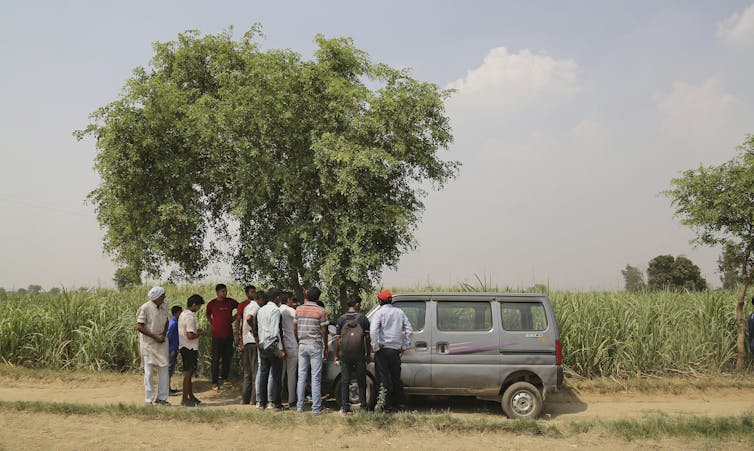
Villagers gather near a crime scene in a field near Jewar, India, where a gang of highway robbers allegedly raped four women in May 2017.AP Photo/Altaf Qadri
Getting women at the table
India has contemplated the need for more women in public office.
In 2010, the upper house of its legislature voted on a bill that would have designated one-third of seats in national and state legislative assemblies for women. Then-Prime Minister Manmohan Singh described it as a “historic step forward toward emancipation of Indian womanhood.”
But the lower house never voted on the bill. And though Prime Minister Modi has expressed support for a gender quota in Indian government, he has made little effort to work with parliament to get the legislation passed.
Putting Indian women in positions of political power won’t solve a longstanding, pervasive and entrenched social issue like violence against women.
But evidence suggests that an Indian government with more women in it could better protect Indian women by passing comprehensive laws that defend women from abuse and help victims recover. Nisha Bellinger, Assistant Professor of Political Science, Boise State University
This article was originally published on The Conversation. Read the original article.
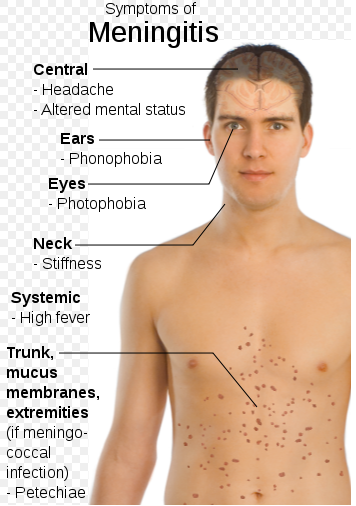
Meningitis - cause, symptoms, prevention and cure: Note: Only for information and precaution.
There are two types of Meningitis, viral and bacterial.The microbes that cause both viral and bacterial meningitis spread through close contact that includes activities like kissing and also sharing food, drinks or eating utensils. Meningitis refers to the inflammation of the membranes surrounding the spinal cord. It can produce severe symptoms such as persistent headache, stiff neck, fever and nausea. Swelling can cause a range of long-term effects from memory loss and weakness to paralysis and seizures.
Meningitis can produce symptoms such as persistent headache, stiff neck, fever and nausea. Viral meningitis cases usually resolve themselves in seven to 10 days and are almost never fatal. There is no vaccine that can prevent viral meningitis
Most with the viral form of the disease recover with no long-term effects. Though it is much less deadly than its bacterial counterpart, viral meningitis is much more common
It is encouraged to get vaccinated for bacterial meningitis even if diagnosed as viral. If person are diagnosed with meningitis others, near and dear, can take a preventive dose of antibiotics just in case they might have been infected.
Bacterial meningitis, in addition to inflaming the meninges, sometimes causes dangerous blood infections called septicaemia.
If not treated quickly with powerful antibiotics, bacterial bloodstream infections can cause multi-organ failure, permanent neurological damage and death.
Bacterial meningitis, which has a five percent to 10 percent death rate, can be treated with antibiotics. Antibiotics work to treat only the bacterial form of the disease.according to the U.S. Centers for Disease Control and Prevention.
Dr Jenny Waycott
John*, a widower, is a retired engineer aged in his 90s. He lives alone in the family home and has struggled with loneliness and depression since his wife passed away. He feels frustrated that as he gets older he can no longer do many of the things he used to enjoy, which exacerbates his sense of feeling alone in the world.
Read more:
Is a vegetarian diet really more environmentally friendly than eating meat?
Social isolation in old age
In Australia, one-quarter of people aged 65 and above live alone. Some older people, like John, will be vulnerable to social isolation, which occurs when people have limited opportunities for human contact and become disconnected from society.
Not all older people who live alone are socially isolated. And social isolation is certainly not limited to old age. But social isolation in old age is a significant concern. It is linked to a range of health problems and, in extreme cases, can lead to people growing old and dying alone.
There have been public calls to address social isolation. Earlier this year, UK Health Secretary Jeremy Hunt controversially urged people to invite lonely elderly strangers into their homes in an effort to avoid “lonely deaths”. In Australia, many aged care organisations and local councils offer social programs designed to help older people stay connected to others.
But for older people with limited mobility it can be difficult to take part in organised social activities. And not everyone wants to invite strangers into their homes. For these people, social technologies could provide valuable opportunities to stay connected to the world.
Read more:
Protecting older residents from Hurricane Florence
Older people and social technologies
Older people are going online at growing rates and social networking is no longer considered the domain of the young. Pew Research Centre found that that more than half of American internet users aged over 65 now use Facebook.
But not all older people feel comfortable using social networking sites. Existing sites, such as Facebook, can be confusing, with too many functions, distractions and extraneous information. Some older people, meanwhile, fear a loss of privacy and malicious intent when communicating online.
Researchers at the University of Melbourne developed a prototype iPad application, Enmesh, to explore how social technologies can be used to help alleviate older people’s experience of social isolation. The app was a simple social networking tool designed to be easy, fun and safe to use. Its simplicity meant it avoided many of the problems that make existing social networking tools difficult or unattractive for older adults.
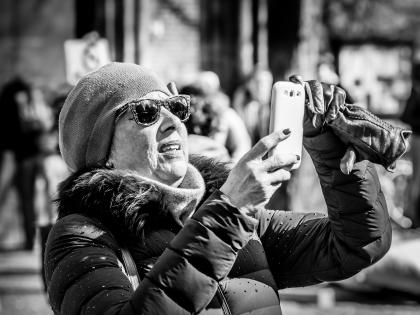
Image: Sjoerd Lammers, Creative Commons, via Flickr
Enmesh was used to share captioned photographs and messages within a closed group. The photographs then appeared on an interactive display on each person’s iPad screen. This provided a safe and fun space for people to learn how to use the iPad’s touchscreen and camera while also developing new friendships.John was one of several older adults, mostly aged in their 80s and 90s, who took part in a series of studies to trial Enmesh. During the study, John shared over 100 photographs and messages with other older adults, all strangers to him at the start of the project.
Sharing photographs might seem like a simple and familiar form of communication to those of us who use social media every day. But for John, and others like him, it was a revelation.
Many of John’s captioned photographs provided personal, poignant – and sometimes humorous – descriptions that illustrated how he felt about ageing. Others could relate to his experiences and felt they got to know John through his photographs.
One of the older adults John connected with was Sarah*. She said the project gave her a sense of belonging to a group. She enjoyed sharing and seeing other people’s photographs. They provided “little snippets” that gave her insight into people’s lives. Sarah said:
It’s lovely to have conversations and I don’t have nearly enough, as I rarely go out or have visitors. I love it when one of those things is possible, but in the meantime this is a wonderful way of keeping in touch with folk.
Older adults who are socially isolated may have few opportunities to share information about their day-to-day lives. Photo-sharing with peers provides an important outlet for this communication.
Empowering older people
Technological innovations for older people – such as emergency alarms and devices that monitor activity – are typically designed to compensate for frailty and provide peace of mind for family members.
While these innovations are important, the Enmesh study has shown that technologies can offer powerful social opportunities for older people too.
As consumer technologies continue to advance, there will be more opportunities to enhance older people’s social worlds through technology. Alongside growing innovation, we need to build capacity in the aged care workforce to ensure the aged care industry is mobilised to take advantage of new technologies. *Names have been changed.
This article was originally published on The Conversation. Read the original article.
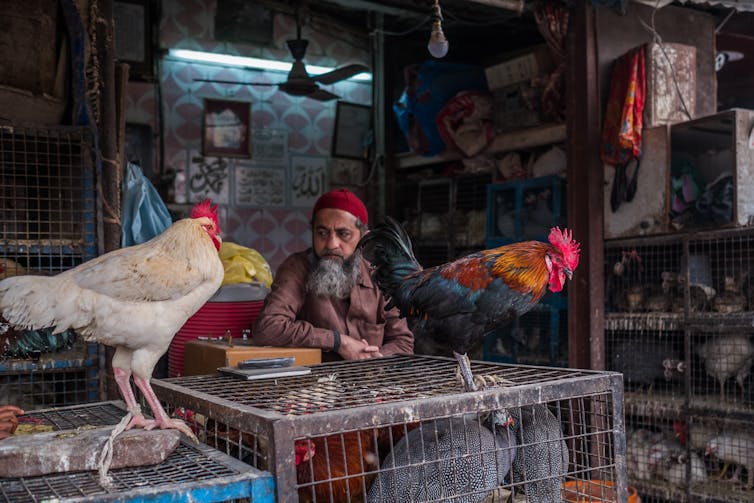
Indian has a booming poultry market.
Pau Casals/UnsplashTani Khara, University of Technology Sydney
India has a reputation as a vegetarian nation, and Indians certainly consume far less meat than the global average. But the view of India as a predominantly vegetarian nation may not be quite accurate.
India, whose population is predicted to overtake China’s, is rapidly changing from an agricultural society to an industrial economy with a surging urban population. This is driving the fastest-growing poultry market in the world, as cultural norms change and eating meat becomes a status symbol.
In addition to religious and cultural variations, several key factors have influenced India’s shift, overall, towards meat consumption. These include rising urbanisation, increasing disposable incomes, globalisation and cross-cultural influences. Many urban Indians are embracing consumerism as a sign of upward social mobility and meat is widely considered to be a status symbol.
Despite this, others still consider meat-eating to be socially and culturally unacceptable. A 2015 study found young people felt “you eat [meat] in secret, away from your family”.
This appears to reflect differences in front-stage and backstage behaviours, a trait mainly found in collectivist cultures. “Front-stage behaviours”, which is how we act in public, may have more role-playing elements than backstage behaviours, which tend to be carried out in private.
It seems urban Indians today face a dissonance. On one hand, increasing exposure to new lifestyles is creating cultural change, but there is still pressure to adhere to traditions that have prevailed for centuries.
This contradiction is reflected in some of the urban Indian attitudes from the 2015 study on meat consumption. On one hand, some felt:
…in our Bhagvad Gita, Ramayan (in reference to the Hindu holy books) there are old teachings that non-veg is impure. It is the food of demons/monsters.
On the other hand, it was also claimed:
[When it comes to] holy men and Brahmins, it’s not like they don’t like eggs or meat. In front of people they will behave, but on the quiet/sly, they will smoke and drink and eat everything else.
Meat eating in India is a complex issue, with many facets. However, recent trends and figures certainly seem to indicate one thing: it is a mistake to label India as a vegetarian nation. Tani Khara, PhD student in Sustainability, University of Technology Sydney
This article is republished from The Conversation under a Creative Commons license. Read the original article.
Specializing in a specific sport at an early age is not necessary to become an Olympic athlete. In fact, the opposite is true.
(AP Photo/David Goldman)Nicole W. Forrester, Ryerson University
The next Olympics are less than two years away and for many athletes, the Games in Tokyo will be the pinnacle event in their career. Aspiring Olympians strive to compete on the world’s largest sporting stage, but only a few will ever realize that goal.
While anatomical and physiological factors clearly play a role in the development of a super-elite athlete, there are other critical components necessary to achieve success.
So, just how does somebody become an Olympian? As an Olympian and former world-class high jumper, I know that hard work and dedication are just part of the formula for success.
It is not uncommon for coaches, parents and athletes to believe that specializing in a sport at an early age is the secret ingredient to becoming a world-class athlete — especially when you consider the success of athletes like Tiger Woods and Rafael Nadal, who excelled in their sports at an early age. However, research exploring elite athlete development suggests their chosen path is less common than the typical case.
Read more: child-abuse-begins-with-touch
The 10,000-hour myth
In addition to the belief that starting early is a path to success, the popularity of the 10,000-hour rule has given rise to the belief that a certain numeric value of time must be acquired for an individual to become an expert.
The 10,000-hour rule is a fallacy that has been taken out of context, neglecting the most significant research findings by Swedish psychologist Anders Ericsson.
In that seminal study into the development of expertise in musicians, Ericsson and colleagues found talent to be the result of “deliberate practice” that occurred over a span of 10 years — or approximately 10,000 hours for some individuals. The study stated the concept of deliberate practice was more important than any magical number.
Deliberate practice is a highly structured activity requiring intense effort and is not inherently enjoyable. It is not about training and clocking in the hours of practice. Rather, it is about being immersed in the action at hand, with the end goal of improving one’s performance. In fact, the acquisition of expertise has been achieved with as few as 4,000 hours of deliberate practice.
Testing the theory of deliberate practice and 10,000 hours, Dan McLaughlin, at the age of 30, quit his job and began to learn how to golf with the hopes of achieving his PGA Tour card. He reached a golf handicap of two by the summer of 2018.
The importance of play
Musicians, athletes and other people in other fields pursuing excellence appear to share the need for deliberate practice. However, sport also requires the unique element of deliberate play — arguably just as important as deliberate practice. Deliberate play is intrinsically motivating unstructured play in sport, designed to provide a high degree of enjoyment. An example of deliberate play is a group of kids playing shinny instead of an organized hockey game. Ice time and positions are not structured by an adult, and kids of different ages and skills play against each other for the sake of fun.
On the surface, deliberate play may not appear to provide immediate benefits in the advancement of an athlete’s ability. The real benefits of deliberate play are actually realized later in an athlete’s development.
Deliberate play provides a breadth of cognitive and motor experiences while supporting an athlete’s later involvement in deliberate practice activities. Most importantly, it is fun and keeps children enjoying sports. The most common reason youths drop out of sport is that it is no longer fun. That means the best way to ensure your child drops out of sport is to force them to specialize at an early age.
In a study exploring the amount of training time elite hockey players acquired, researchers from Queen’s University found that by the age of 20, an equal amount of time was shared between deliberate play and deliberate practice.
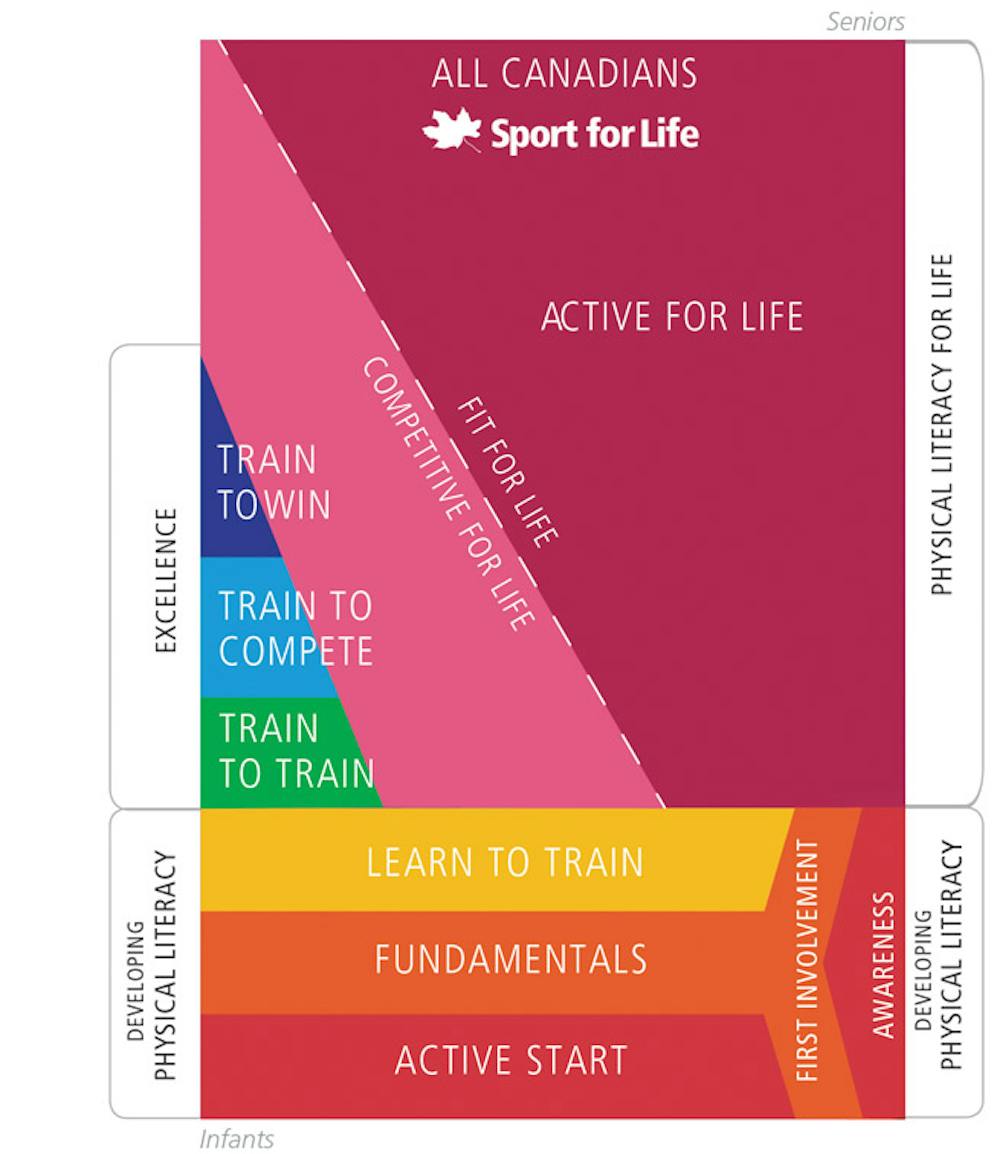
Recognizing the progression of athlete development, the Long-Term Athlete Development model is a framework enacted by sport organizations to promote skill learning in accordance to human development.Sport for Life Society
In the initial phase of the development model, termed the sampling years, athletes are introduced to various sports with a focus on having fun and deliberate play. In their teens, athletes enter the specializing years and begin to reduce their involvement in numerous sports. In this phase, the element of having fun is still important and coupled with the introduction of intentional effort.
As athletes advance in age (approximately 15 years and older), they enter the investment years and begin to focus on a primary sport. It is here where deliberate practice plays a larger role and the role of deliberate play lessons.
While this model is not intended to be the universal approach to developing sport expertise for all athletes, it certainly provides a framework for recognizing the integral role of deliberate play, deliberate practice and diversification in sport play.
It is worth noting that other factors, such as one’s date of birth and the size of their town, have also been associated with predicting elite athlete development. These cases highlight the role that environment plays in an athlete’s development.
Sometimes luck plays a role
And then there’s the element of luck, which was a factor in my own athletic career.
Author Nicole Forrester, seen here competing at the 2008 Summer Olympics in Beijing, didn’t start high jumping until she was 18 years old.THE CANADIAN PRESS/Ryan Remiorz
I was almost 18 when a track and field coach saw me and my tall, lean physique working at McDonald’s and gave me the phone number of a high jump coach at the University of Toronto. That fateful day led me to become a member of 20 national teams, an eight-time Canadian champion, an Olympian and a multi-medalist on various major Games, spanning a career more than 15 years.
I attribute my quick progression in the high jump to the various sports I played growing up. Had I started specializing in my sport at an earlier age, I doubt I would have lasted for as long as I did or had the same level of success.
The path to becoming an Olympian requires a mixture of important ingredients that may vary according to the sport and the individual athlete. Ultimately, for many, the path is navigated through deliberate play and involvement in various sports, developed through a commitment of deliberate practice, and reinforced by support, resources, motivation and effort.
Most importantly, in sports where peak performance occurs after maturation, early sport specialization is not the answer to becoming a super elite athlete. Nicole W. Forrester, Assistant Professor, School of Media, Ryerson University
This article was originally published on The Conversation. Read the original article.
Bay Trump Kudüs'ü İsrail'in başkenti olarak görmüş ve ABD Büyükelçiliğini Tel Aviv'den Kudüs'e kaydırma sürecine başlamayı emretmiştir. Haber raporlarına göre, 1 Aralık'ta ABD Başkanları tarafından her 6 ayda bir imzalanan vazgeçme feragatnamesi Bay Trump tarafından imzalanmadı.
Arap ülkelerinin Tepkileri:
ABD Başkanı'nın Kudüs'ü İsrail'in başkenti olarak ilan etmesinin ardından ilk 24 saatte Ürdün Kralı Abdullah ve Türkiye Cumhurbaşkanı Tayyip Erdoğan, ABD'nin tanınmasına karşı şiddetle çıktı. BM Güvenlik Konseyi üyeleri, Cuma günü İngiltere ve çoğu Avrupa Birliği üyesi bir toplantıda ABD kararını kınadılar. 22 Arap devletinin cumhurbaşkanı Kahire'de toplanan 22 ülkeden dışişleri bakanları , ABD Başkanı Donald Trump'ın Kudüs'ü İsrail'in başkenti "tehlikeli ve kabul edilemez" ve İsrail-Filistin çatışmasına "siyasi bir çözüm üzerinde açık bir saldırı" olarak tanıma kararı aldı. Trump'ın İsrail yanlısı eylemini kınayan harekete geçti, az sayıda Arap ülkesi buna karşı aktif bir şekilde karşı çıktı.BirçokArap ve Körfez ülkesine (GCC), Filistin artık ilk Arap meselesidir.Kalkınma ve özgürlükle ilgileniyorlar ve ABD'yi askeri açıdan karşı koymak ya da ABD'yi antagonize etmek istemiyorlar.
Suudi Arabistan Girişimi:
Bay Trump açıklama yapmadan önce, İsraillilerle Filistin arasındaki barış inisiyatifi için bir Suudi önerisi , Doğu Kudüs'ün yerine Filistin'in gelecekteki başkenti olan Abu Dis köyünü, yaygın öfkeyi karıştırarak öne sürdü. İsrail kaynaklarına göre,Filistin Devlet Başkanı MahmoudAbbas,geçen hafta bir toplantı için Riyad'a çağrıldıktan sonra, Suudi Arabistan'ın Veliaht Prensi Muhammed Bin Salmantarafından bir ültimatom verildi.Bin Salman,ABD'nin talimatıylaAbbas'a Donald Trump'ın İsrail-Filistin barış anlaşmasını geri almak ya da istifa etmek zorunda kaldığını söyledi.
Arap ve Müslümanların Cevapları:
Dünya üzerindeki Arap ve Müslümanlar için Kudüs duygusal bir meseledir.ABD ve İsrail'e karşı dünya çapında spontane bir protesto yapıldı , ancak beklendiği kadar güçlü değil.
Arap rejimleri ciddi değildir ve açıklamalar yalnızca kamu tüketimine yöneliktir, çünkü insanlar dünya çapında gösterildiği gibi açıkça öfkelendiriliyor. Bu konuda Arap Birliği'nden çok az şey beklense de, sokaktaki protesto ve şiddetle ve aşırılık yanlısı örgütlerden sürpriz saldırılarla uğraşmaya hazır olmalılar.
Filistinliler: Filistinliler Doğu Kudüs'ü Filistin'in başkenti yapmak istiyorlar. Dolayısıyla, diğer Arap uluslarının geri çevirmeleri olsun veya olmasın, bunu reddedecek herhangi bir hamele karşı direnilecek. Filistin'deki durum bir ateşte yanacak kadar yanıcı. İsrail'e karşı büyük çapta bir Filistinli terörist saldırı her zaman kartlarda ve çok sayıda can kaybına neden olan öfkeli bir mafyayla karşılaşan İsrail güvenlik güçleri için büyük bir salgın tetiklemekten çıkarılamıyor.
"Explore a wide range of health care products and personal care products at Amazon.in and gift a wholesome life to yourself and your loved ones. Buy online a variety of diet & nutrition products, including sports supplements like whey proteins from brands like Optimum Nutrition, MusclePharm, BSN & EAS; vitamin supplements from Amway, Herbalife, Centrum, Inlife; and health drinks & nutrition bars from AloeCure and Ultimate Nutrition. A complete home is one that has a dedicated and well-stocked infirmary. To help you achieve that, Amazon India brings you an exhaustive list of healthcare supplies to maintain a fully functional domestic infirmary. Shop online for ayurvedic formulations for skincare, bowel care, kidney care and more from Organic India, Herbal Hills and Dabur and select one that suits your requirements. We also have health care devices like blood glucose monitors, blood pressure monitors, pedometers and thermometers from Omron, Detak, Equinox, Indigo and Dr. Morepen. In addition, there are special devices like compressors and vapourisers for those suffering from allergies and pain relievers like electrothermal hot water bags, electric heating blankets, ice bags, anti-cervical foam pillows and joint pain relief oils. We also stock various mobility aids & equipment like folding wheelchairs, walkers and walking sticks to make life easier and comfortable for the elderly. Explore a wide range of household essential products at Amazon.in. Buy online from a wide range of household supplies like laudry and detergents, household cleaning, toilet cleaning, paper towels & tissues, dishwahing from brands like Surf Excel, Lizol, Harpic, Vim, Ariel, Domex, Comfort, Airwick, Selwak. A complete home is one that has a dedicated and well-stocked essentials for household. To help you achieve that, Amazon India brings you an exhaustive list of household supplies. We also have range of Air fresheners, disposable kitchenware and pooja supplies selection for you. Personal hygiene is a top priority in all our lives. You can choose from a wide selection of personal care products online, which include shaving & hair removal gels, creams & strips from Veet and Anne French; feminine hygiene products like sanitary napkins & tampons from Whisper; deodorants & antiperspirants for men & women from Axe, Playboy, Davidoff, Denim, Nike, Dove and Spinz. You can also choose to buy contraceptives online from Durex, KamaSutra and Moods and sexual wellness products online like stimulants, capsules, sprays and lubricants from Fairhaven, Kohinoor, Climax, Summer's Eve and more."